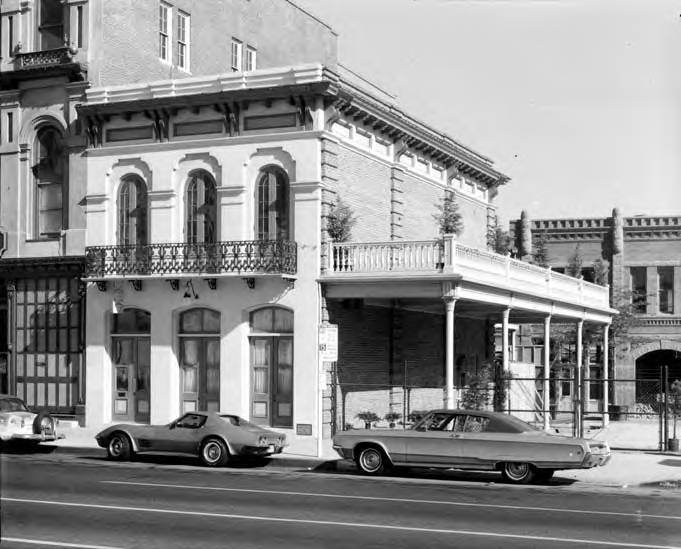
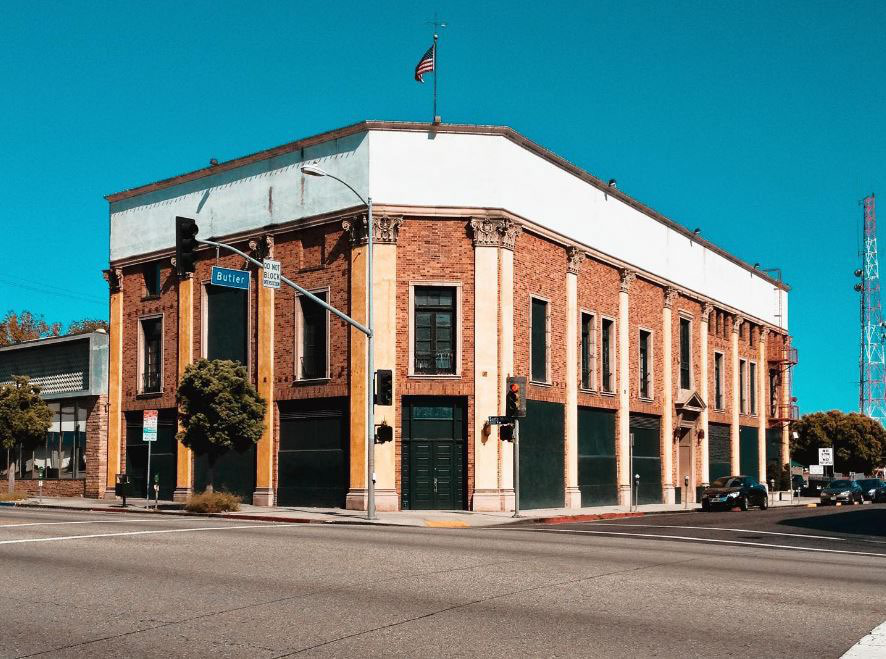
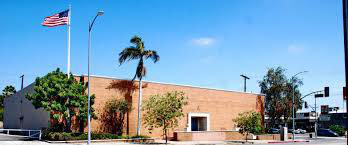
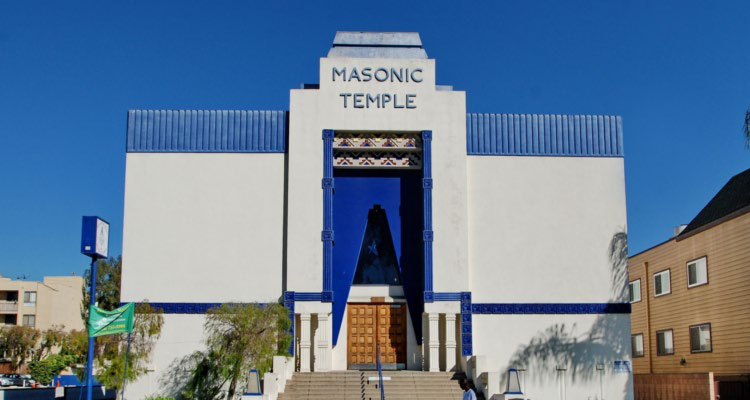
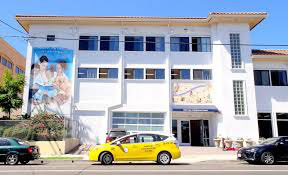
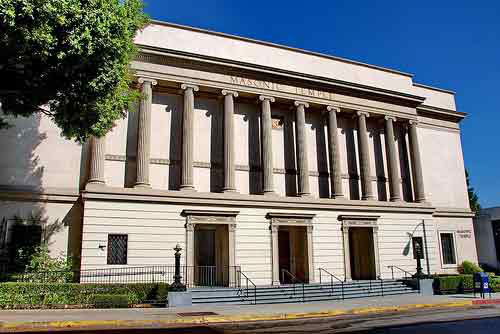
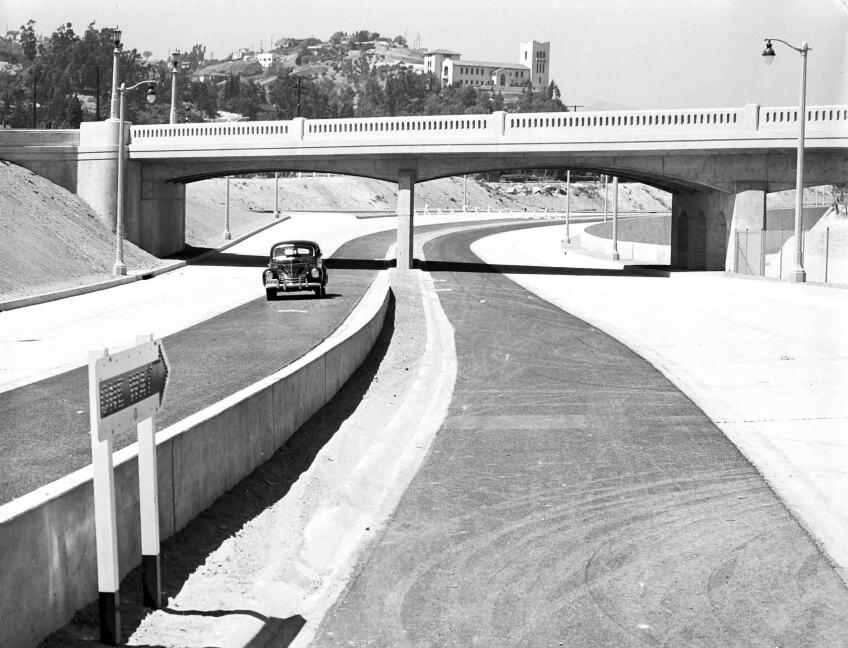
Built in 1858, the Masonic Hall served as the first lodge building and second meeting place for Los Angeles Lodge No. 42. One of the oldest buildings in Los Angeles, it was slated for destruction in the late 1940s to make way for a freeway. However, California Masons successfully lobbied to save it and won an early victory for the historic preservation movement in Los Angeles. Today, the building is part of the El Pueblo de Los Angeles Historical Monument.
First Meeting Site of Masons in Los Angeles: The Bella Union Hotel (today the Los Angeles Mall)
Link copied!
300 N. Main Street
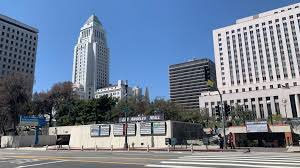
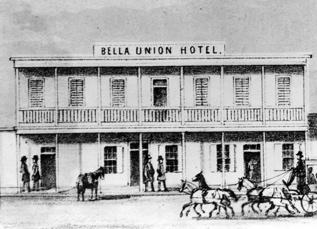
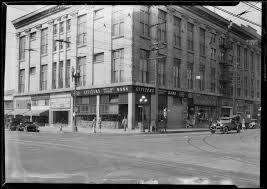
In 1851, Masons in Los Angeles started meeting informally at the Bella Union Hotel before formally establishing Los Angeles Lodge No. 42 in 1853. The only hotel in the wild west town, The Bella Union also served as the town’s first courthouse, while its saloon was the site of several gun battles. The building was demolished in 1940 to make way for a parking lot. Today, the site is home to the Los Angeles Mall.
Site of the Masonic Temple (today the Los Angeles Convention Center)
Link copied!
1301 S Figueroa St
Completed in 1908, the three-story Masonic Temple was designed by architects Frank Hudson and William Munsell, both Masons, who also designed the original Shrine Auditorium (which burnt down in 1920). Demonstrating the popularity of Masonry at the time, the building served over five thousand people, including chapters of the Eastern Star, Knights Templar, Royal Arch Masons, and multiple blue lodges. The building was demolished in the 1980s to make way for the expansion of the Convention Center.
Westlake Masonic Lodge Building
Link copied!
1810 W. 8th Street
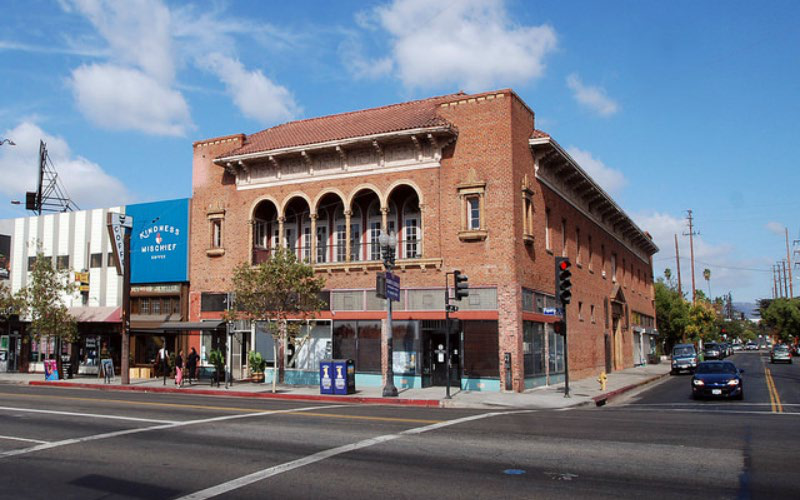
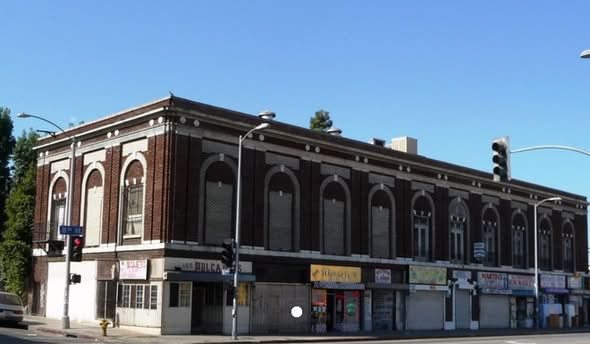
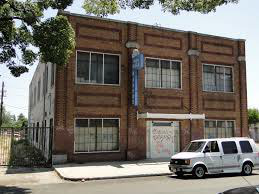
Completed in 1915, the Westlake Masonic Lodge was designed by architects Oliver P. Dennis and Henry Harwood Hewitt. The two-story building with an exterior finish of ruffed brick, included a banquet hall, ladies’ parlor, smoking-room, library, marble vestibule, and halls which the Los Angeles Times described as “the finest in Los Angeles.” The building served as the home of Westlake Lodge No. 392 for decades before being vacated and today houses several small shops.
Shrine Auditorium
Link copied!
649 W. Jefferson Boulevard
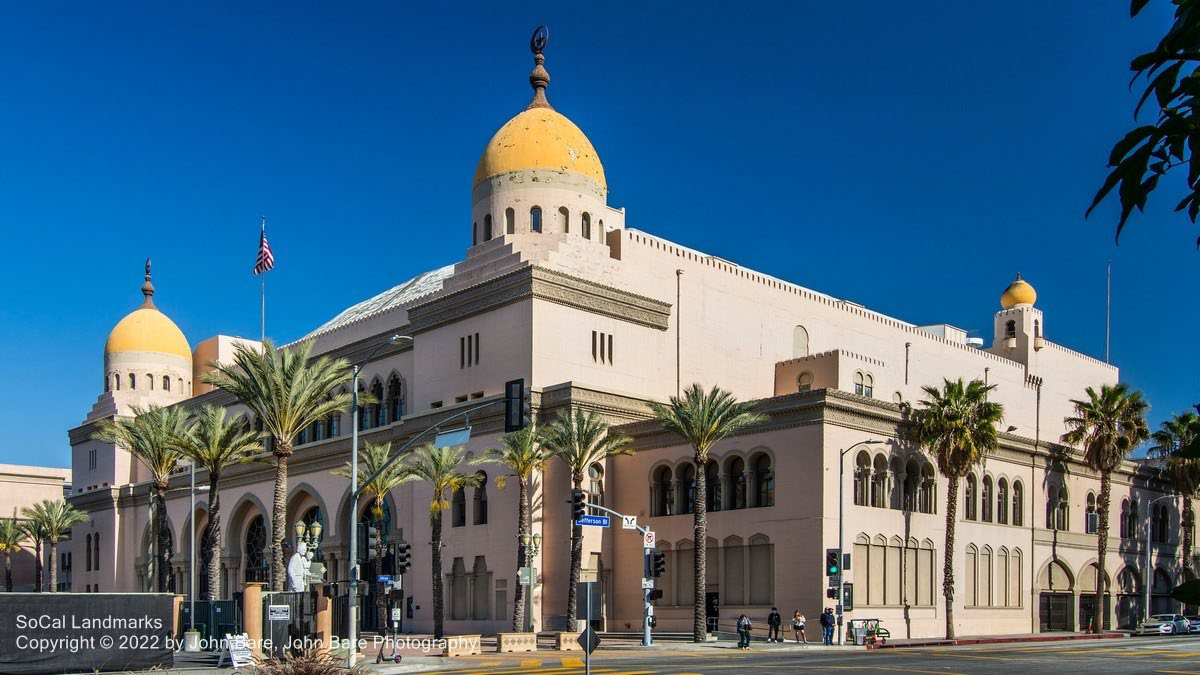
Designed by architects John C. Austin, Abram M. Edelmen, and G. Albert Lansburgh in the Moorish Revival style, the building serves as the headquarters of the Al Malaikah Temple of the Ancient Arabic Order of the Nobles of the Mystic Shrine for North America. When it opened in 1926, with over 6,700 seats, it was the largest theater in the United States. Over the years, it has hosted the Academy Awards, the Grammys, the Emmys, as well as performances by Elvis Presley, Ray Charles, and the Grateful Dead.
Los Angeles County Natural History Museum
Link copied!
900 Exposition Boulevard, Los Angeles
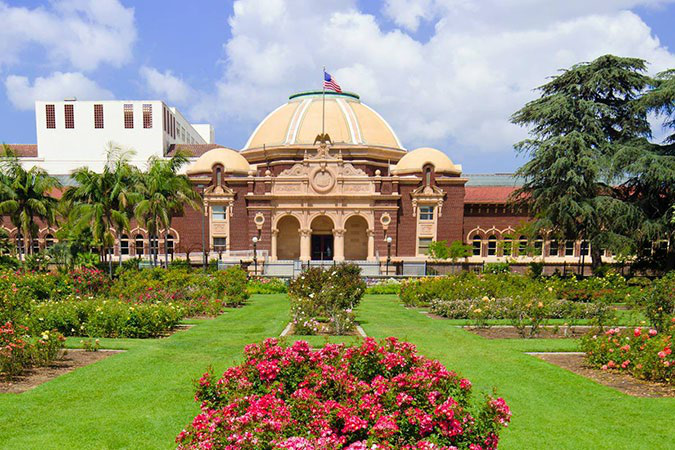
Founded in 1913 as the Museum of History, Science, and Art, the gorgeous Beaux Arts structure was designed by local architects Frank Hudson and William Munsell, both of whom were Masons. Hudson was a member of Pentalpha Lodge No. 202 and Munsell was a member of Alhambra Lodge No. 322. The original Hudson and Munsell building was added to the National Register of Historic Places in 1975.
Original Shriners Hospital
Link copied!
3150 Geneva Street
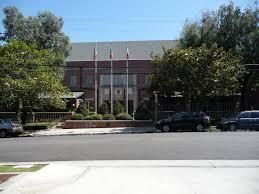
In 1945, Al Malaikah Temple obtained approval to proceed with plans to build a Shriners Hospital in Los Angeles. Local Shriners raised $1.5 million and the original hospital, a large brick building designed by the architectural firm Chambers and Hibbard, was opened in 1952. The hospital operated at this location for 65 years before relocating to Pasadena in 2017. There are currently plans to repurpose the building for medical clinics and senior housing.
The Lodge at Hollywood Forever Cemetery
Link copied!
5970 Santa Monica Boulevard
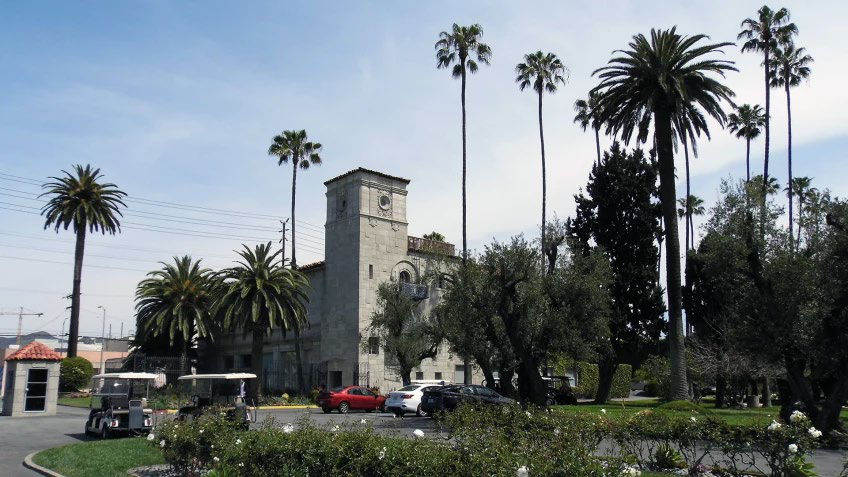
Completed in 1927 and situated within what was at the time called Hollywood Cemetery, the Spanish Baroque-style structure once served as the home of Southland Lodge No. 617. The building stopped being used as a lodge in the 1960s and sat vacant for years before being repurposed as a concert hall, event space, and outdoor movie theater.
Prince Hall Masonic Temple
Link copied!
1050 East 50th Street
The Prince Hall Masonic Temple was built in 1926 (and opened in 1927) so Los Angeles Prince Hall Masons could have a meeting place of their own. For decades, the building served as a hub of the community hosting multiple lodges and other Masonic organizations, but also charity events, musical performances, scouting events, fashion shows, medical clinics, political meetings, dances, and art shows. The building was placed on the National Register of Historic Places in 2009.
The Lasky-DeMille Barn
Link copied!
2100 Highland Avenue
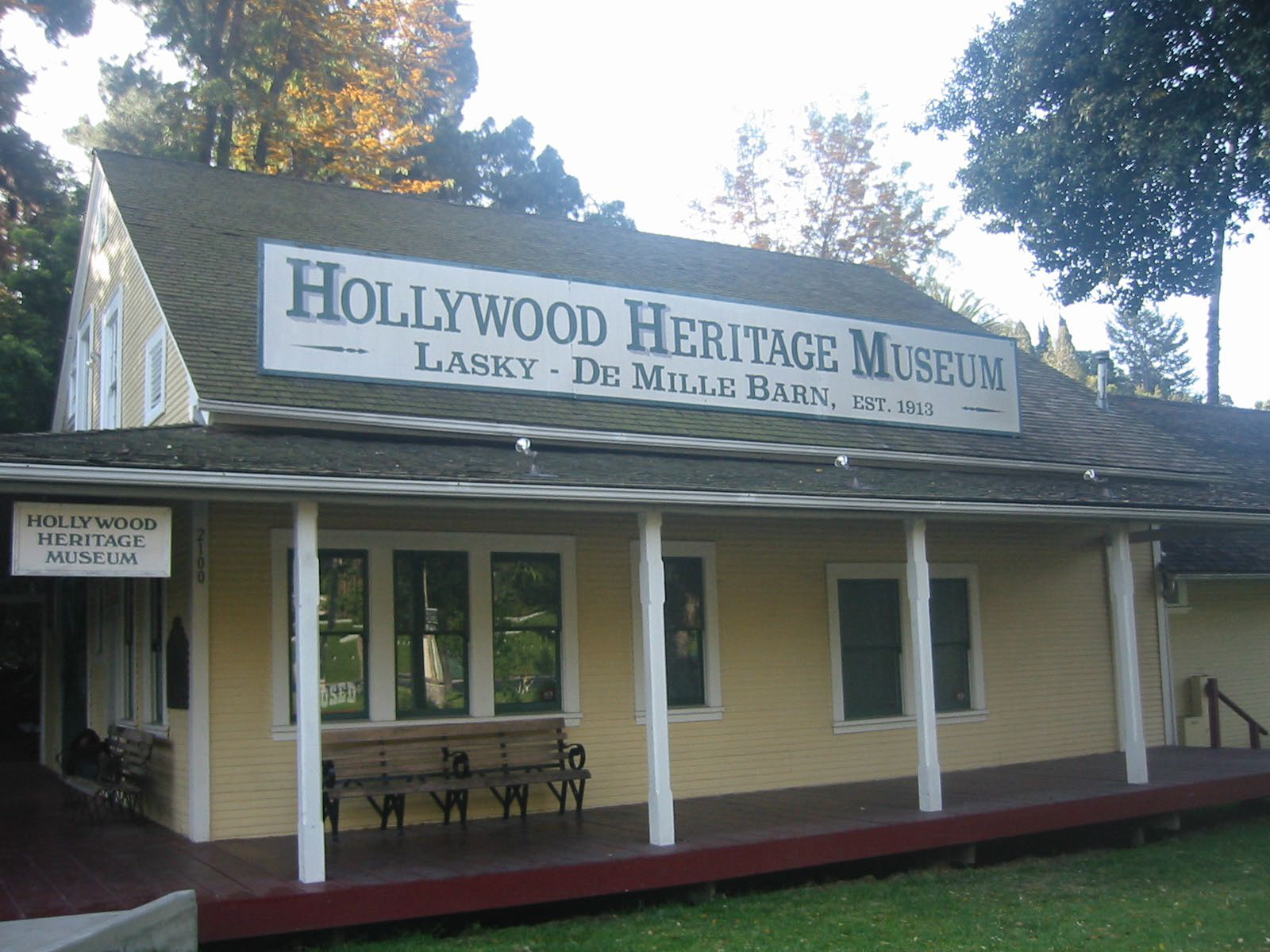
In this building, in 1914, Masons Cecil B. DeMille and Jesse L. Lasky made the first feature-length film ever produced in Hollywood. The film, The Squaw Man, was a huge success and launched DeMille’s career and Lasky’s company, which eventually became Paramount Pictures. The structure has been moved several times over the years and now stands across the street from the Hollywood Bowl, where it houses the Hollywood-Heritage Museum.
Grauman’s Chinese Theatre (now TCL Chinese Theatre)
Link copied!
6925 Hollywood Boulevard
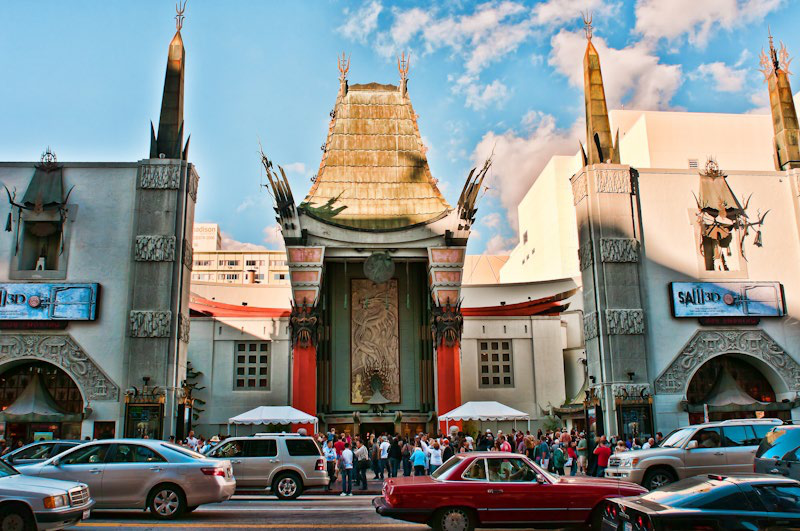
The famed theater was developed by Charles E. Toberman, a member of Hollywood Lodge No. 355, who is known as “the Father of Hollywood.” Partnering with Sid Grauman, Toberman secured the land and built the theater. The theater opened in 1927 with the premiere of Mason Cecil B. DeMille’s The King of Kings. You can find the handprints of multiple Masons in the theater’s forecourt, including Harold Lloyd, Roy Rogers, Douglas Fairbanks, Clark Gable, Cecil B. DeMille, Bud Abbott (Abbott and Costello), Gene Autry, and John Wayne.
Geffen Playhouse
Link copied!
10886 Le Conte Avenue
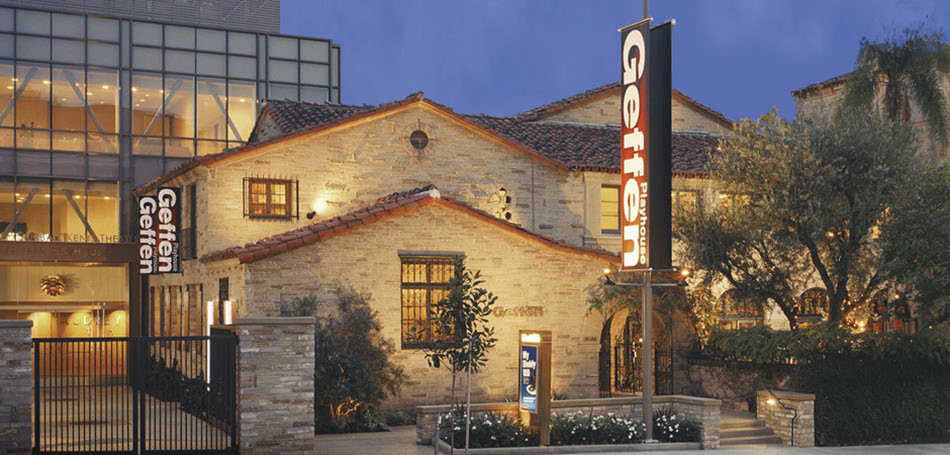
Built in 1929, and designed by Stiles O. Clements, it was originally the Masonic Affiliates Club, a masonic clubhouse for UCLA students and alumni. The building, which was one of the first 12 structures in Westwood, was sold in the early 1970s, later acquired by UCLA, and eventually became the Geffen Playhouse, one of city's premier live theater venues.
A Moment in Time Sculpture
Link copied!
9400 Culver Boulevard
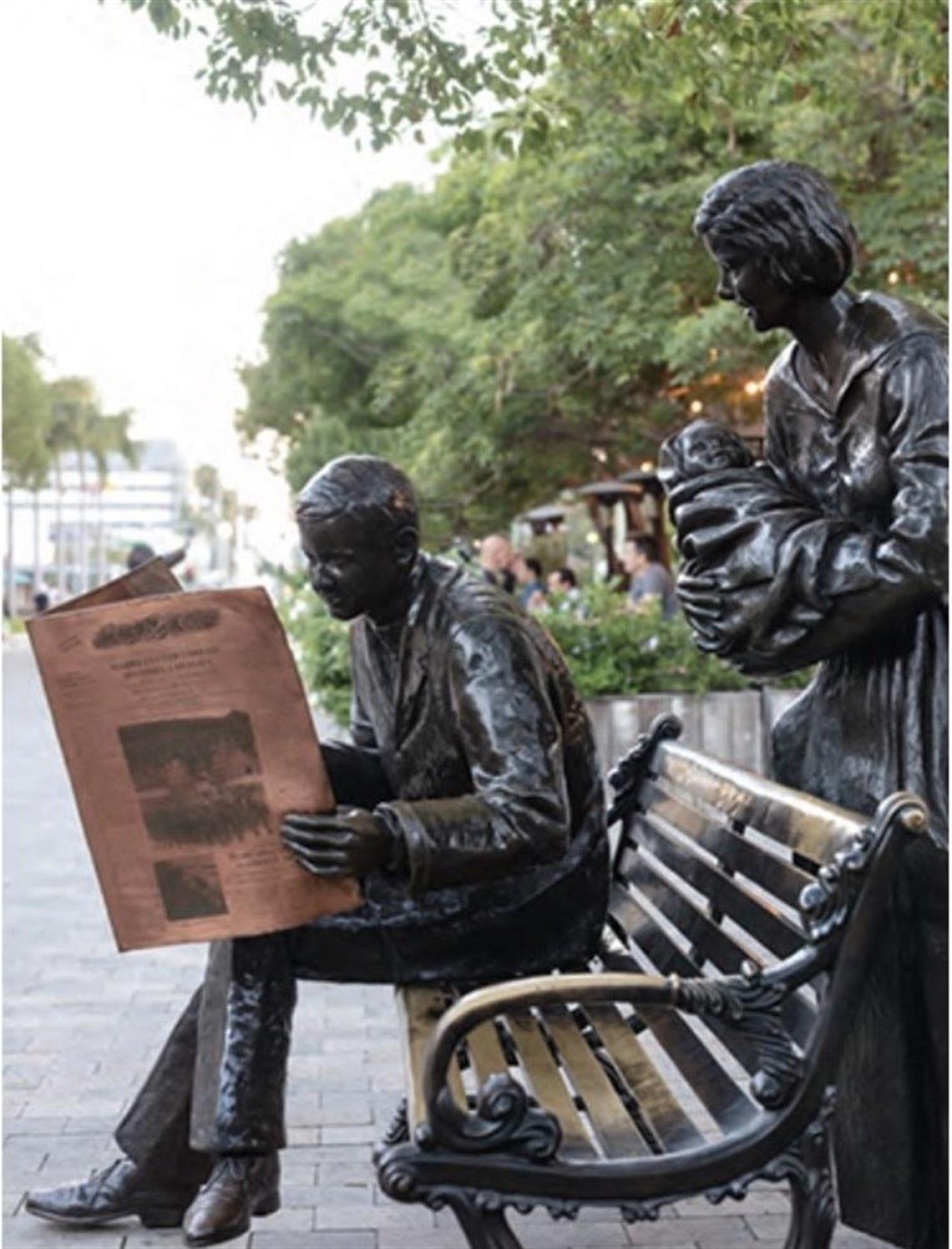
Located outside the Culver Hotel, the bronze sculpture depicts Harry Culver, the founder of Culver City, seated on a bench reading a newspaper, while his wife stands behind him holding their baby. Culver, a real estate developer, was a Mason and one of the founders of Culver City – Foshay Lodge No. 467.
Venice Canals
Link copied!
2480 Pacific Avenue
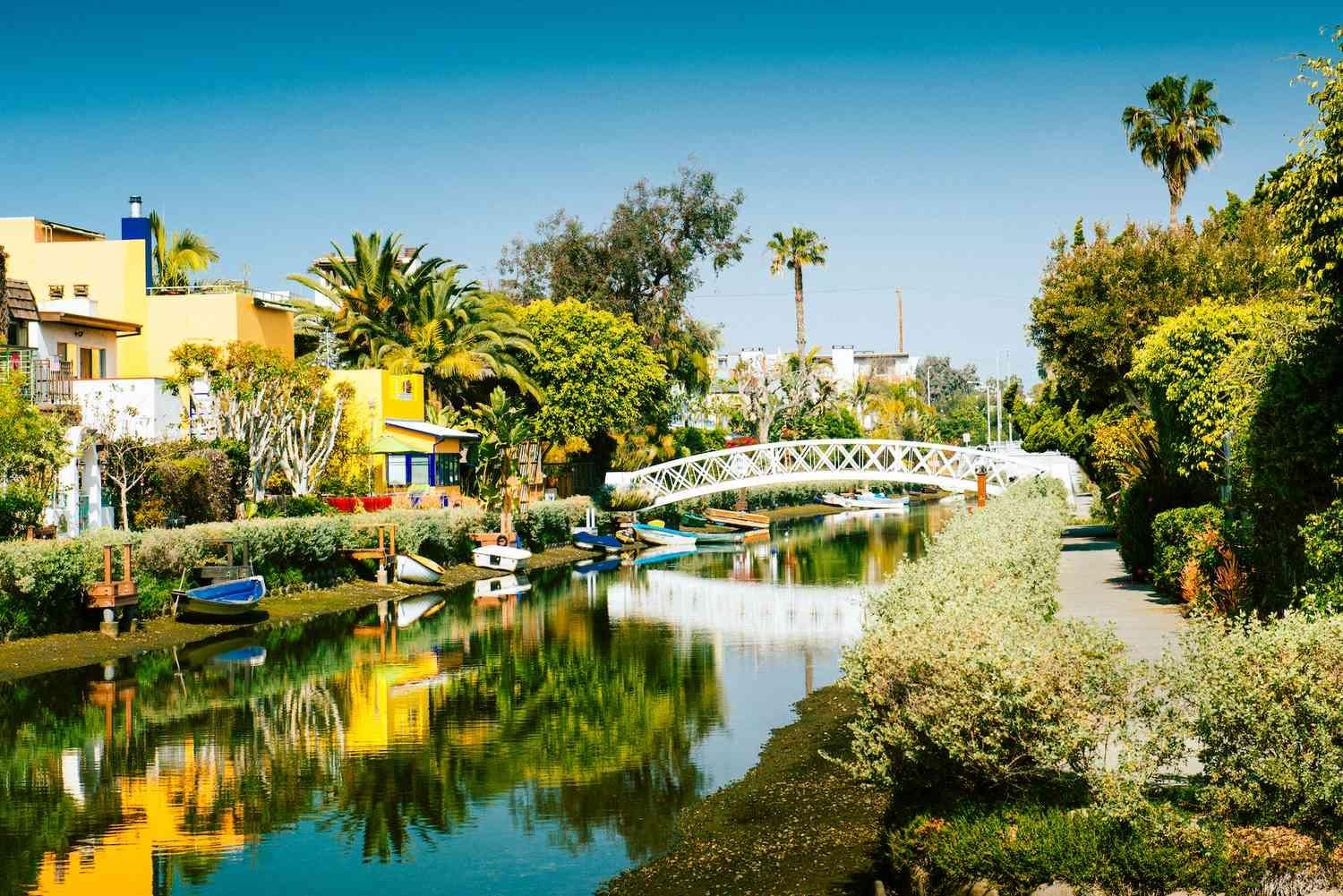
The Venice Canals were the brainchild of developer Abbot Kinney, a Mason and member of Pasadena Lodge No. 272. Opened in 1905, the Venice in America project consisted of a few square miles of canals, bridges, and private homes, by which Kinney sought to recreate the appearance and feel of Venice, Italy.
Elysian Masonic Temple
Link copied!
1900 N. Vermont Avenue
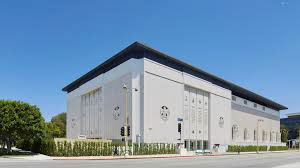
Completed in 1959, the sleek mid-century modern building without any windows features a large interior mural by the famed artist Millard Sheets. The building is home to Elysian Lodge No. 418, but also serves as a frequent set for movies, television shows, and commercials, including the Campaign, Beverly Hills Cop 4, The L Word, NCIS: Los Angeles, S.W.A.T., 9-1-1, and Justice.
Philosophical Research Society
Link copied!
3910 Los Feliz Boulevard
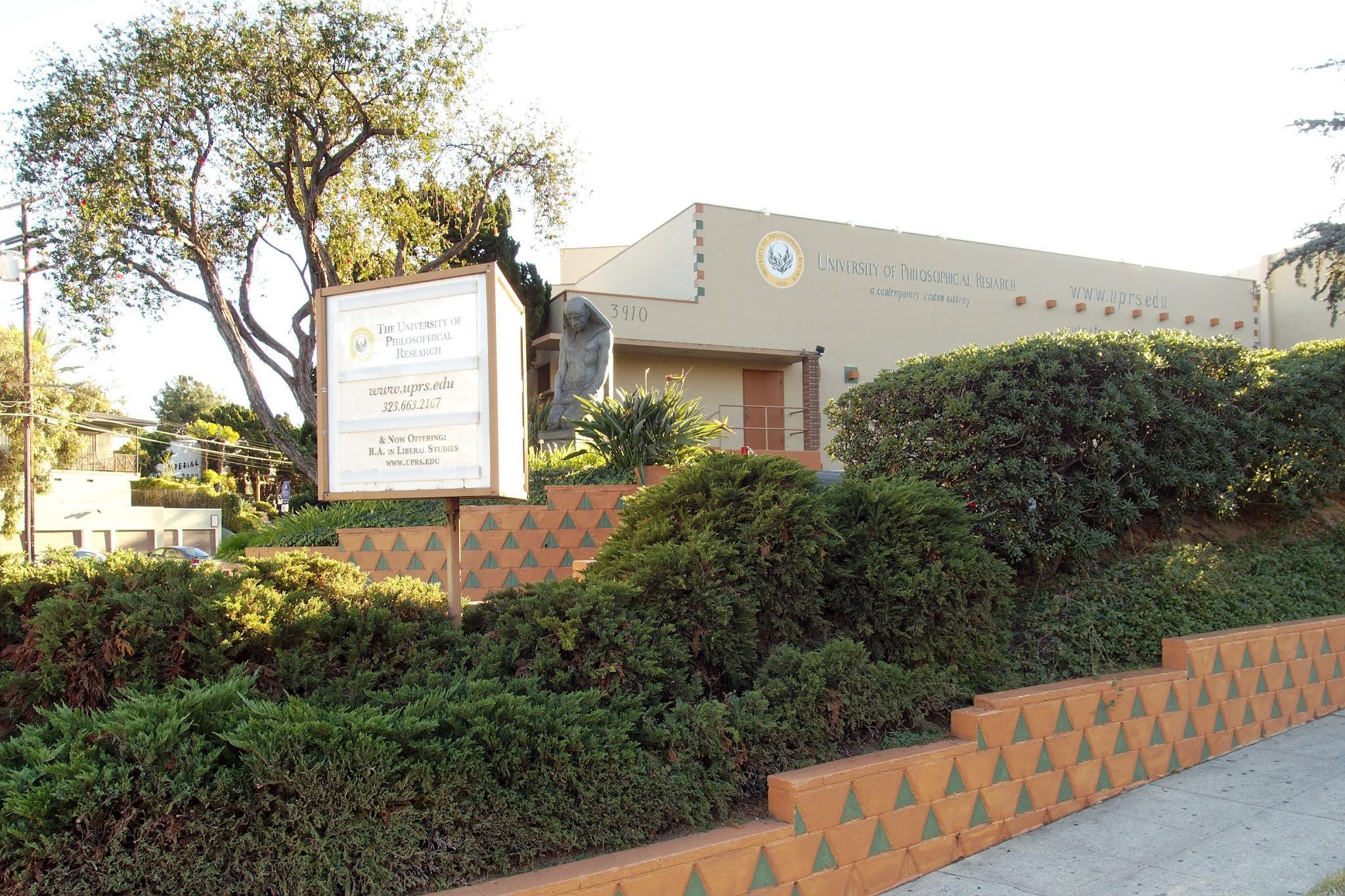
Founded in 1934 by Manly P. Hall, a prolific author on philosophy, comparative religion, freemasonry, and esoteric knowledge, the Mayan Revival campus was designed by architect Robert Stacy-Judd and has been designated a Los Angeles Historic Cultural Monument. Today, the Philosophical Research Society maintains a research library of more than 50,000 volumes and regularly holds lectures, readings, and performances.
Griffith Park Merry-Go-Round
Link copied!
4730 Crystal Springs Drive
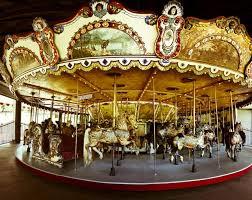
DeMolay Walt Disney was sitting on a bench watching his kids ride this Merry-Go Round when he was first inspired to create Disneyland. Built in 1926, and brought to Griffith Park in 1937, this historic carousel features 68 hand-carved horses and a vintage band organ. It is currently closed for renovations with plans to reopen in time for the 2028 Olympics.
Griffith Observatory
Link copied!
2800 East Observatory Road
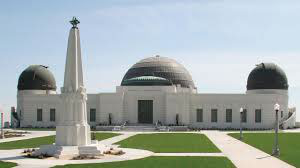
Completed in 1935, the famed observatory, which combines Greek and Beaux-Arts styles was designed by architect and Mason, John C. Austin, who also designed the Shrine Auditorium, Los Angeles City Hall, and Hollywood Masonic Temple. The observatory has been featured in numerous films, including Rebel Without a Cause, The Terminator, Devil in a Blue Dress, and La La Land.
North Hollywood Masonic Lodge
Link copied!
5124 N. Tujunga Avenue
Completed in 1951, the Mayan-inspired building was designed by one of California’s more eccentric architects, Robert Stacy-Judd, in association with John Aleck Murrey, an architect and member of North Hollywood Lodge No. 542. The striking building, which combines Mesoamerican-inspired motifs with the clean lines of Art Moderne now serves as an event center.
Toberman Neighborhood Center
Link copied!
131 N. Grand Avenue
This non-profit neighborhood center, which provides services to low-income residents of Los Angeles, was founded by James R. Toberman, a former Los Angeles mayor and member of Los Angeles Lodge No. 42. During his tenure as mayor (1872-1874, 1878-1882), Toberman switched on the city’s first electric streetlights, helped map out its first streetcar grid and water and sewer systems, and paved Main Street for the first time. The Homer Toberman Mission was established by Toberman in 1903 after his son, Homer Toberman, died of influenza, and is the oldest continually running charity in Los Angeles.
Pasadena Scottish Rite Cathedral
Link copied!
150 North Madison Avenue
Built in 1925, the Zig Zag Moderne structure with a pair of sphinxes at the entrance, was designed by Joseph J. Blick and is the third meeting place for Scottish Rite Masons in Pasadena. The building features a 400 plus seat theater which, while remodeled in the 1960s, retains stage machinery from the early 20th Century, including a large number of Sosman & Landis scenic backdrops, some of which date back to the 1890s.
Pasadena Masonic Temple
Link copied!
200 South Euclid Avenue
Completed in 1927, the Pasadena Masonic Temple was designed by architects Cyril Bennet and Fitch Haskell in the style of Beaux-Arts Classicism. Cyril Bennet was a prominent architect who designed several important Pasadena buildings, including the Pasadena Civic Auditorium, the Pasadena Playhouse, and the Raymond Theater. Today, it is the home of Pasadena Lodge No. 272, Wisdom Lodge No. 202, and Hiram Lodge No. 12 (Prince Hall).
Arroyo Seco Parkway
Link copied!
1111 S Arroyo Pkwy
On December 30, 1940, the grand opening ceremony for L.A.’s first major freeway, the Arroyo Seco Parkway, which connects Los Angeles to Pasadena, featured Los Angeles Mayor Fletcher Bowron, a Mason and member of member of Albert Pike Lodge No. 484. Bowron, who served as mayor from 1938 until 1953, pushed for the development of the city’s massive freeway system. A public square across the street from Los Angeles City Hall is named in his honor.
Eaton Canyon
Link copied!
1750 N. Altadena Drive
This canyon in the San Gabriel Mountains is one of the area’s most popular hiking areas (though it is currently closed due to the 2025 Eaton Fire). The canyon is named for Benjamin Eaton, a member of Los Angeles Lodge No. 42, who served as L.A.’s fourth District Attorney. Eaton lived nearby at his Fair Oaks Ranch and helped found the City of Pasadena.
Switzer Falls
Link copied!
701 Angeles Crest Hwy
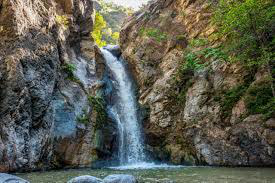
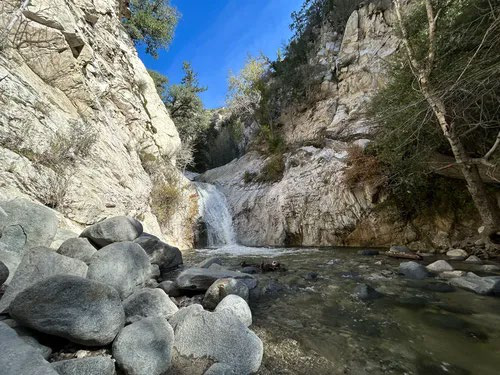
In 1884, Commodore Perry Switzer, a member of Los Angeles Lodge No. 42, opened a fifteen-mile trail up the Arroyo Seco and camp near a seventy-foot waterfall. The settlement became famous as “Switzer-land,” a popular hiking destination which helped usher in Southern California’s golden age of hiking. Today, all that remains of Switzer-land are trailside ruins but the hike to Switzer falls is still one of the most popular waterfall hikes in Southern California.
Site of the First Masonic Home in Southern California
Link copied!
137 South San Gabriel Boulevard
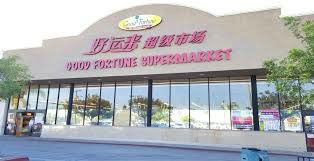
In 1905, the Southern California Masonic Home Association purchased the former East San Gabriel Hotel (1887) to use as a Masonic Home. Originally planned as a permanent residence and hospital for indigent brothers, their widows and orphans, the site became exclusively used for children. The old hotel building was difficult to maintain so a new facility was built in Covina and the Masonic Orphans Home in San Gabriel was closed in 1915. The building was demolished in 1925 and today is the site of an Asian supermarket.
Masonic Home of Covina
Link copied!
1650 East Old Badillo Street
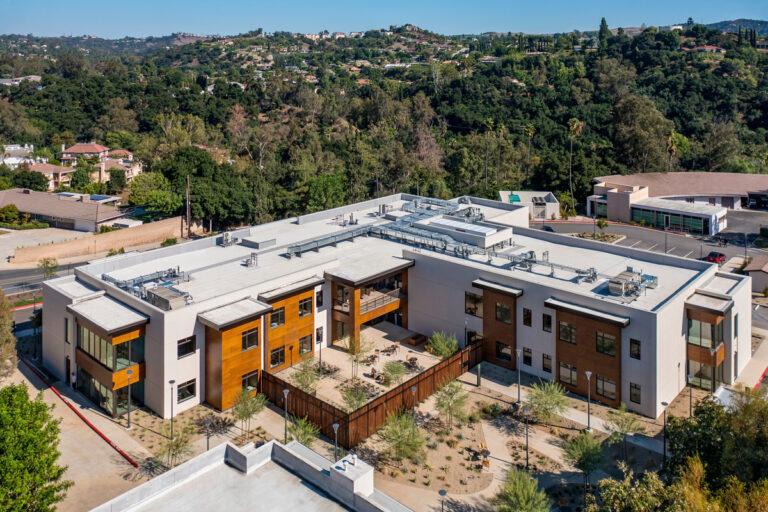
Established in 1916 on a former 33-acre citrus ranch, the Masonic Home of Covina originally served as an orphanage. In 1987, the facility welcomed its first senior residents and has since evolved to exclusively serve seniors. Today, the Covina campus is home to about 80 residents who live in comfortable one-bedroom apartments designed for independent and assisted living.
Site of the First Masonic Funeral Service in LA (El Campo Santo)
Link copied!
15415 East Don Julian Road
On November 11, 1855, members of Los Angeles Lodge No. 42 performed the first Masonic funeral service in Los Angeles for David Workman, a member who died while driving cattle to the gold fields in Northern California. The funeral was held at his brother, William Workman’s private El Camp Santo Cemetery, which is today part of the Workman and Temple Family Homestead Museum.